Burnham on Sea Lifeboat Station




| Inshore Lifeboats | |
|---|---|
| Launch Method | Carriage |
| Address | Pier Street, Burnham-on-Sea, Somerset, TA8 1BT |
| Telephone | 01278 789375 |

Explore two centuries of RNLI lifeboat history, heroic rescues, and the enduring tradition of saving lives at sea.
At the mouth of the River Parrett on Bridgwater Bay, Burnham-on-Sea runs a fast Atlantic 85 and a D-class over a coast of vast sandbanks and notoriously treacherous mudflats. A lifeboat first served the town in 1836; after a long gap the RNLI returned in 2003, taking over from an independent rescue service.
The first lifeboat at Burnham-on-Sea was a gift from Sir Peregrine Acland to the Corporation of Bridgwater in 1836, kept in a boathouse erected by the donor and following closely on a local shipping disaster; it was operated by the Bridgwater Harbour Trust. The RNLI took over in 1866, providing the lifeboat The Cheltenham and building a boathouse, replaced in 1874 by a building near the railway station.
The all-weather station closed in 1930. For decades the only cover came from neighbouring stations, until in 1993 the independent Burnham Area Rescue Boat (BARB) began operating; in 2003 BARB decided to focus on its rescue hovercraft — well suited to the local mudflats — and invited the RNLI to provide a sea-going inshore lifeboat.
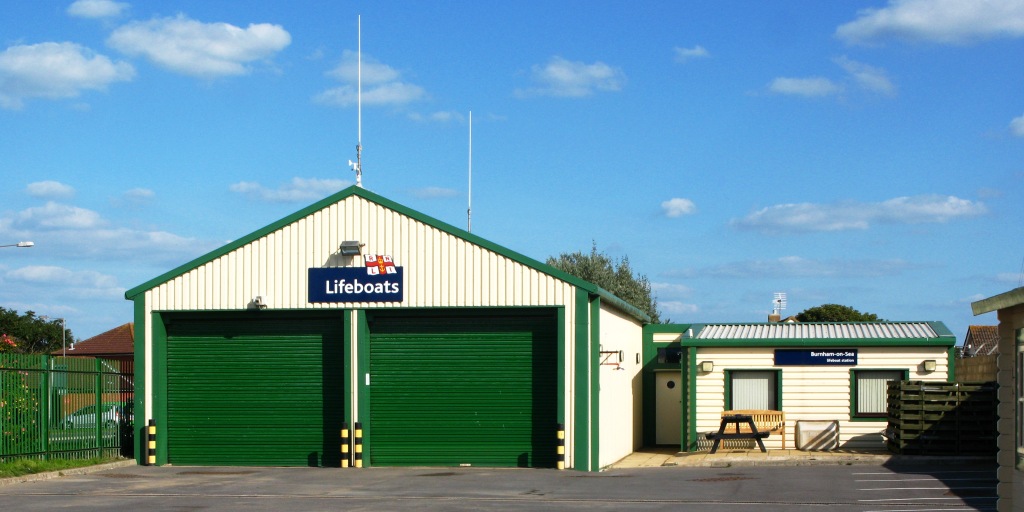
The RNLI re-established the station, operational from 23 December 2003, near the old 1874 boathouse, and it now runs an Atlantic 85 and a D-class. The work here is dominated by the bay’s enormous tidal range and its expanses of soft mud and quicksand, on which people and animals regularly become stranded as the fast tide floods back.