Evolution of the inshore lifeboat and PPE


The modern RNLI crew PPE (Personal Protective Equipment) comes from over 150 years of development
The modern RNLI crew PPE (Personal Protective Equipment) comes from over 150 years of development and is essential for the safety and lifesaving ability of any crew member that goes to sea. In the early days of the RNLI a lot of crew lost their lives because they didn’t have the technology and equipment that is now available to modern day crews.
Equipment evolution along with the development of faster and more manoeuvrable lifeboats that are in service today, have all significantly increased the capability of the RNLI to help save more lives at sea. Inshore inflatable lifeboats were introduced to the RNLI in 1963 to help crews reach areas that are more inaccessible including rocky shallows, cliffs, and caves. These inshore lifeboats remain the workhorse of the RNLI today, and alongside their development, the RNLI PPE also had to evolve to protect the crews against the greater exposure from operating these vessels.
Evolution of the inshore lifeboat and PPE
3rd June 1963: The first lifesaving service by an inflatable inshore lifeboat and crew when RNLI Aberystwyth rescued three people and their dog cut off by the tide.
1963 Inflatable lifeboats
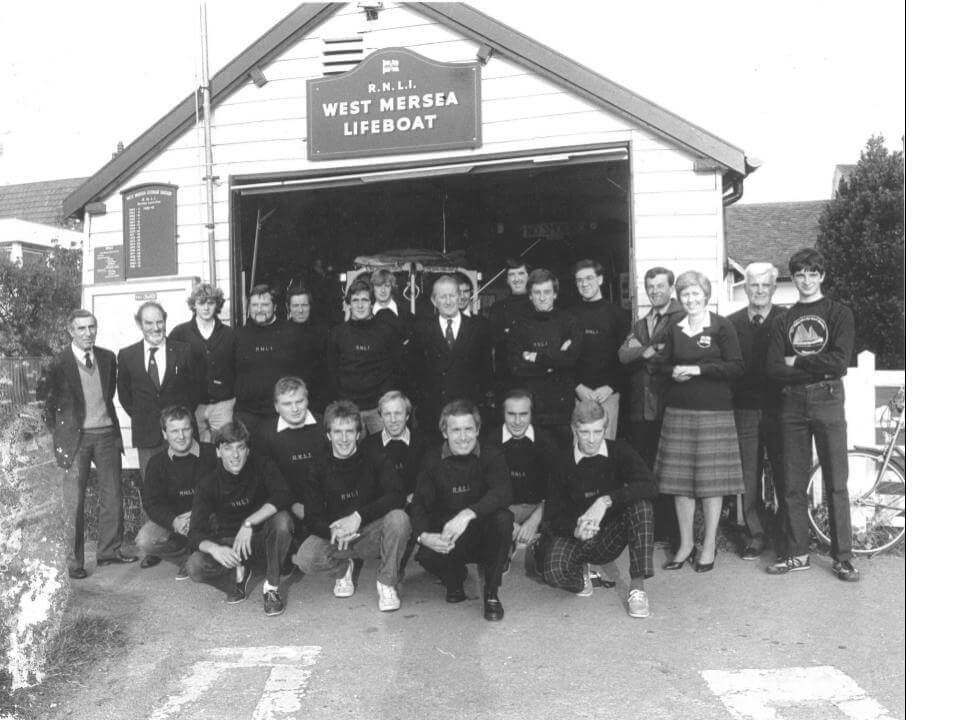
In 1963 inflatable lifeboats (to become today’s D and B Class lifeboats) were introduced to the RNLI fleet to help crews answer the need for a quicker and more agile response to rescues in inaccessible areas of the coastline that were ill-suited to the larger all-weather lifeboats. These pioneering inshore lifeboats were constructed using a tough nylon material, powered by a 40hp outboard engine, reaching speeds of 20 knots. They measured 4.8m in length, with a crew complement of 2. The first RNLI stations to operate this new type of lifeboat were Aberystwyth, Gorleston, Redcar and Wells. Followed by trials at: Mudeford; Southwold; West Mersea; and Whitstable. An inshore lifeboat has remained at each of these stations ever since their original deployment in 1963.
1972 Rigid inflatable lifeboats
Rigid inflatable boats (RIB’s) were developed during the mid 1960s, responding to an ever growing need for faster, durable and more manoeuvrable vessels. Revolutionising the leisure, commercial and military boat industries, the RIB development eventually gave rise to the RNLI’s first “B class” Atlantic 21 lifeboat. The Atlantic 21 was the first generation Rigid Inflatable Boat, originated at and by Atlantic College in South Wales, the birthplace of the RIB after which the craft is named. The Atlantic 21 was operational in the UK and Ireland from 1972 to 2006. The Atlantic 21 was 7.21m in length, with a top speed of 32 knots, and a crew complement of 3. Fast, manoeuvrable and reliable, the B class series, later went on to include the Atlantic 75 (introduced in 1993) and the Atlantic 85 (introduced in 2005), named for their respective lengths of 7.5m and 8.5m. Crew complements of 3 for the ‘75 and 4 for the Atlantic 85.
1977 One-piece rubber drysuits
In 1977 the first one-piece RNLI drysuit was introduced to the RNLI crew PPE. Made from rubber, the drysuit was designed to allow the crew to remain dry even if fully immersed overboard, to be able to move more freely than previous PPE, and to be able to deploy more quickly.
1990s Crewsaver inshore and all-weather lifejackets
The early 1990s introduced separate lifejackets for all-weather and inshore lifeboat crews. All-weather lifeboat crews needed a more compact lifejacket, which inflated automatically on hitting the water. Inshore crews, who enter the water much more frequently, utilise a larger lifejacket with built-in buoyancy that does not auto-inflate.
1990s Gecko helmets
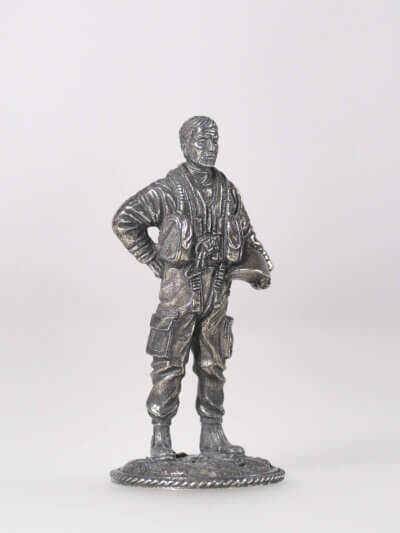
Faster lifeboats and improved communication technology developed purpose-built headgear in the 1990s with the Mark 1 Gecko helmet. In its 10th iteration, the modern Gecko helmet is a sleek, lightweight, robust visored headpiece with the facility to add torches, cameras, and comms equipment. Utilised by all inshore lifeboat crews, the Gecko is the current standard in marine safety helmets.
2000s Typhoon breathable drysuits
Designed to be used with a thermal undersuit known as a “woolly bear”, the modern Typhoon drysuits formed part of the first fully breathable clothing system for the RNLI. They were issued to the then new lifeboat crews on the Thames. All inshore lifeboat crews use the Typhoon drysuit.
Today’s RNLI ILB crew PPE
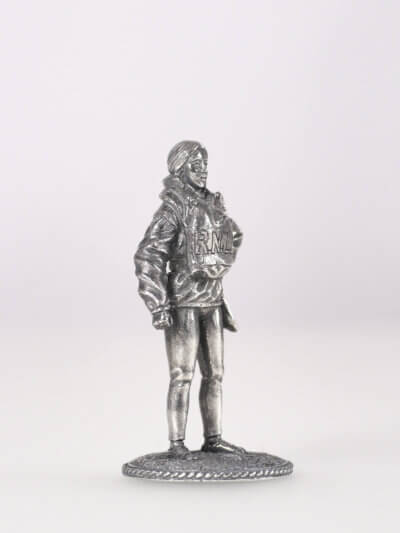
Looking back at the evolution of the RNLI’s fleet, from the first unpowered rowing boats, to the latest B class Atlantics, it can be seen that the modern day RNLI crew PPE development is no less dramatic, when compared to what little the original crews from the 1800’s perilously braved the seas in. Today’s RNLI ILB crew PPE consists of :
- Fully waterproof drysuit
- One piece ‘woolly bear’ under layer
- Crewsaver 380n lifejacket
- Gecko safety helmet
- PLB (personal locator beacon)
- Distress flare
[ References: Wikipedia Image Source: Wikimedia Commons ]