Holyhead Lifeboat Station


| All-Weather Lifeboat | |
|---|---|
| Inshore Lifeboat | |
| Launch Method | Moored afloat |
| Address | Prince of Wales Road, Newry Beach, Holyhead, Anglesey, LL65 1YA |
| Telephone | 01407 762583 |

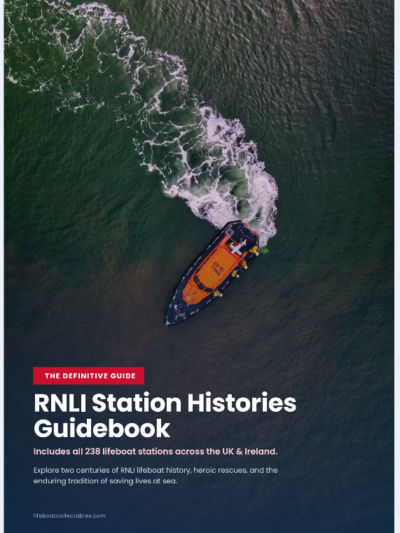
Explore two centuries of RNLI lifeboat history, heroic rescues, and the enduring tradition of saving lives at sea.
At Newry Beach on Holy Island, Holyhead is one of the three oldest lifeboat stations on the North Wales coast and among the most decorated in the RNLI. It runs a Trent-class all-weather lifeboat moored afloat and a D-class, covering the busy Irish Sea ferry route and shipping lanes. Serving since 1828, its crews hold forty-nine gallantry medals.
The first mention of Holyhead in the RNLI’s records is in 1825; a local committee was formed and the first lifeboat arrived in 1828, placed by the Anglesey Association for the Preservation of Life from Shipwreck. The RNLI took over in 1855. As the port for the Dublin packet and a guard on the Liverpool shipping lanes, Holyhead was always an important station — for a time it kept two, and briefly three, lifeboats.
Its gallantry record is exceptional. The Rev. James Williams won a Gold Medal in 1835 for riding a horse into the surf at Cemaes Bay; Coxswain William Owen won a Gold in 1908 for the SS Harold near South Stack; and a Gold followed in 1967 for the Nafsiporos.
The station’s importance is matched by its sacrifice: seven crew were lost in rescues in 1865, 1892, 1901 and 1905. A steam lifeboat served from 1890, a motor lifeboat from 1928, and a new boathouse and slipway were built on Salt Island in 1949. Holyhead now runs a Trent-class lifeboat moored afloat, with a D-class for inshore work around the Stacks.