Ballycotton Lifeboat Station
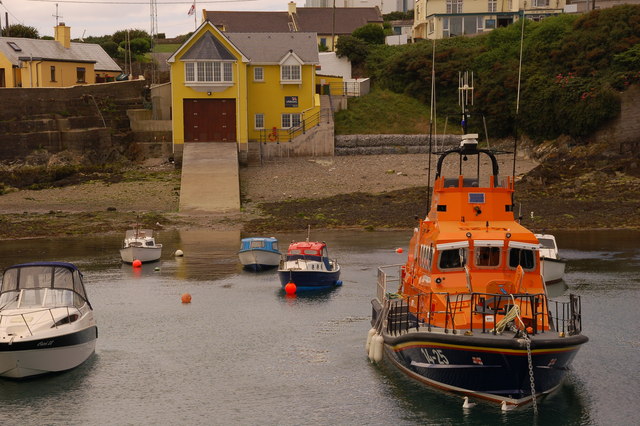
| All-Weather Lifeboat | |
|---|---|
| Launch Method | Afloat |
| Address | Ballycotton, County Cork, Ireland |
| Telephone | 021 464 6903 |

Explore two centuries of RNLI lifeboat history, heroic rescues, and the enduring tradition of saving lives at sea.
Ballycotton Lifeboat Station, on a rocky ledge above Ballycotton Bay in east County Cork, is one of the most famous stations in Ireland. Established in 1858, it is celebrated above all for the Daunt Rock rescue of 1936, when Coxswain Patsy Sliney and his crew battled a hurricane for three days to save the crew of a drifting lightship — one of the most gallant services in RNLI history. The station operates a Trent-class all-weather lifeboat.
The RNLI established a station at Ballycotton in 1858, the first lifeboat — launched by carriage — kept in a house in the village; medals had already been awarded for rescues here in 1826 and 1829. A succession of pulling-and-sailing lifeboats served the rocky east Cork coast until 1930, when the first motor lifeboat, the Barnett-class Mary Stanford, arrived; two years earlier the station’s sailing lifeboat had gone to the aid of the 20,000-ton liner RMS Celtic, wrecked at Roches Point. In a village of barely 460 people, 60 were regular RNLI subscribers, raising the equivalent of 30p per resident in a single year.
The Mary Stanford carried out the legendary 1936 Daunt Rock rescue and saved 122 lives across her career; after years laid up she has since been preserved and returned to Ballycotton. Later lifeboats included the Watson-class Ethel Mary and the Arun-class Hyman Winstone. Since March 1998 the station has operated the Trent-class lifeboat 14-25 Austin Lidbury, kept moored afloat in the harbour.
Up to 2002, seventeen RNLI medals had been awarded to Ballycotton lifeboatmen — two Gold, seven Silver and eight Bronze — a record matched by few stations in Ireland or Britain.