





Description
Lionel Lukins First Lifeboat 1785 | Lifeboat Collectables Fridge Magnet
Lionel Lukins “unimmergible” boat, the world’s first unsinkable boat, paved the way for the first purpose-built lifeboat designed and patented in 1785.
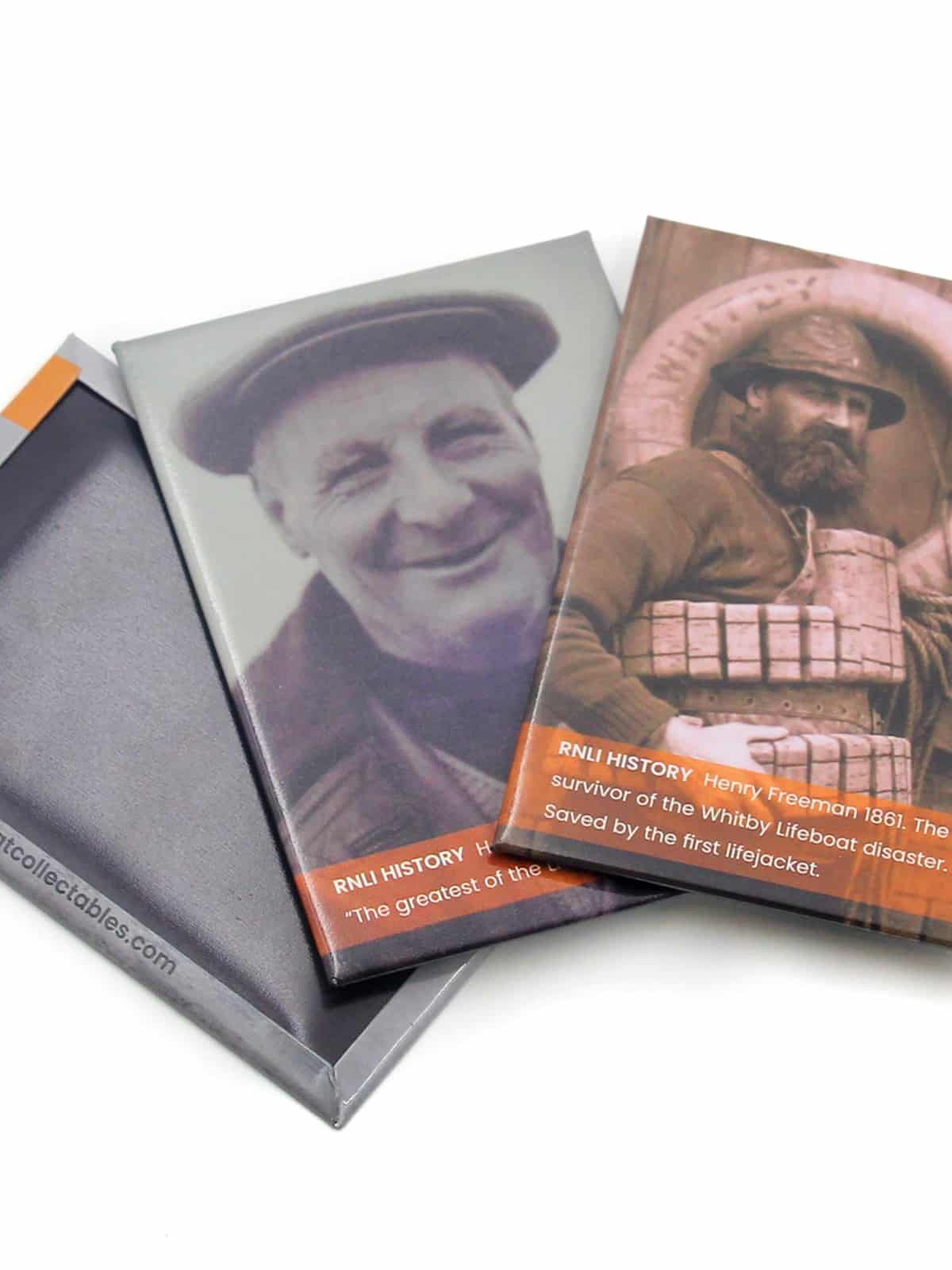
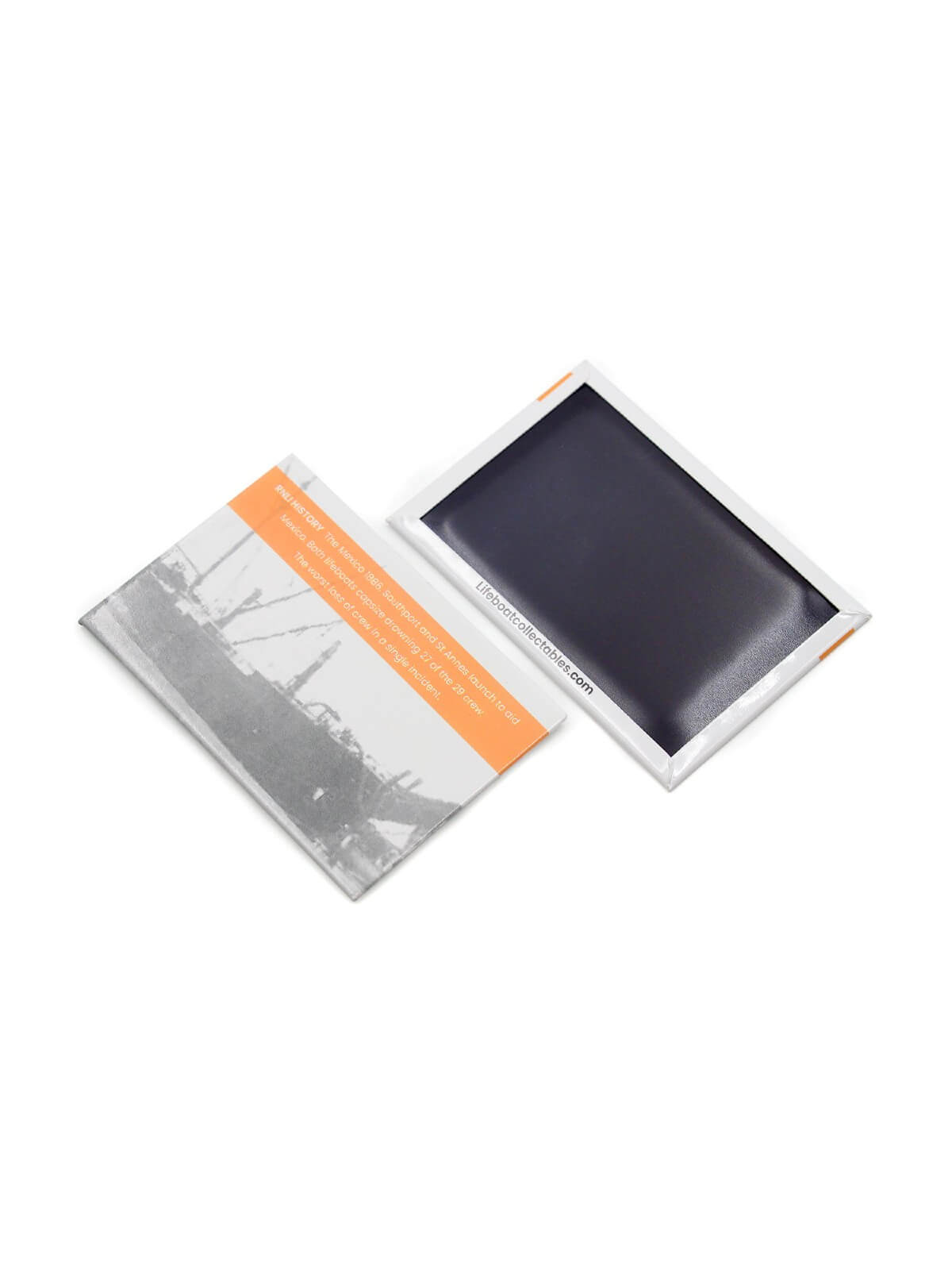
This fridge magnet details Lionel Lukins first unsinkable boat design from 1785, and is part of the full commemorative set of fridge magnets from Lifeboat Collectables which includes famous rescues, key events, and people within the RNLI and its 200 years of service.
1785 Lionel Lukins
In 1784 Lukin had begun experimenting with a Norwegian yawl, a type of sailing boat, using the River Thames to test his ‘unimmergible’ design.
Incorporating pockets of air in watertight bulkheads, buoyant gunwales, using cork and other lightweight materials within the boats structure, fully covered with a protective sheaving of light material. He also included a cast-iron false keel for additional weight to help keep the boat upright.
In 1786 Lukin was commissioned to adapt a fishing boat into his ‘unimmergible’ boat design as a lifeboat for Bamburgh. This converted Coble was the first known lifeboat and Bamburgh Castle the first lifeboat station at that time.
1789 Adventure wrecked with the loss of all hands
Wrecked in 1789 near South Shields, County Durham with the loss of all hands, the tragedy of the ship Adventure once again highlighted the need for dedicated lifesaving vessels and this finally heralded the designs of a new purpose-built lifeboat. The disaster had inspired a competition to find an inventor who could design and build a lifeboat.
The designs of both William Wouldhave and boatbuilder Henry Francis Greathead were ultimately combined for the final lifeboat design, with neither single design an outright winner. William Wouldhave was offered half the prize money which he took offence to and rejected. Henry Greathead was asked to build the lifeboat from the final design and went on to become known as the inventor of the lifeboat.
In 1790 Henry Francis Greathead built the first purpose-built lifeboat aptly named Original. Measuring 9m long and 3m wide, she could carry 20 people including the crew of 12. The Original was steered by two oars trailed over the stern rather than a rudder and could be rowed in either direction using 10 short oars rather than the more common full-length oars, to make her more manageable in heavy seas.
Her first service was on 30th January 1790 when she rescued a shipwrecked crew on Herd Sand. The Original was stationed at South Shields in service until 1830.
Henry Greathead went on to build 31 Original type lifeboats over the next 2 decades for communities around the UK coasts and also some abroad, willing to share his designs for the greater humanitarian good of saving others at sea.
The oldest surviving lifeboat
His eleventh boat, the Zetland built in 1802, saw 78 years of service in Redcar and saved over 500 lives with the loss of only one crew member. She normally had a crew of 13, but up to 20 could be needed in rough weather. This boat is the only one of Greathead’s- to survive, and is preserved at the Zetland Lifeboat Museum and Redcar Heritage Centre.
[References: Wikipedia]



Sarah –
A perfect little piece of RNLI history for my fridge
Jack T. –
Perfect for anyone passionate about RNLI history
Paul R –
pleased with this magnet. It’s a great piece of history
AmyK –
Bought this as a gift for a friend who loves RNLI history. They loved it
Ben f –
Wonderful quality and detail