




Description
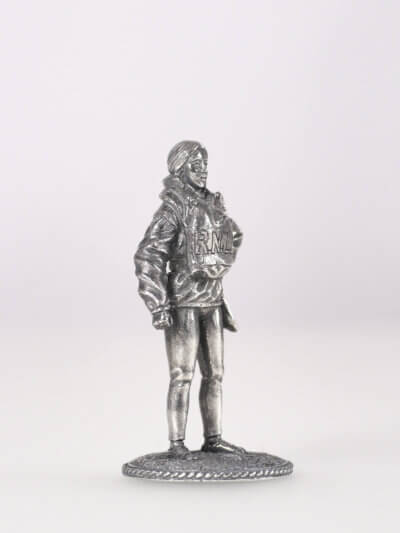
The Forfarshire Rescue 1838 | Lifeboat Collectables Fridge Magnet
At 3am on 7th September 1838, The Forfarshire struck aground with considerable force… Forty-three passengers and crew, including the captain and his wife, perished.
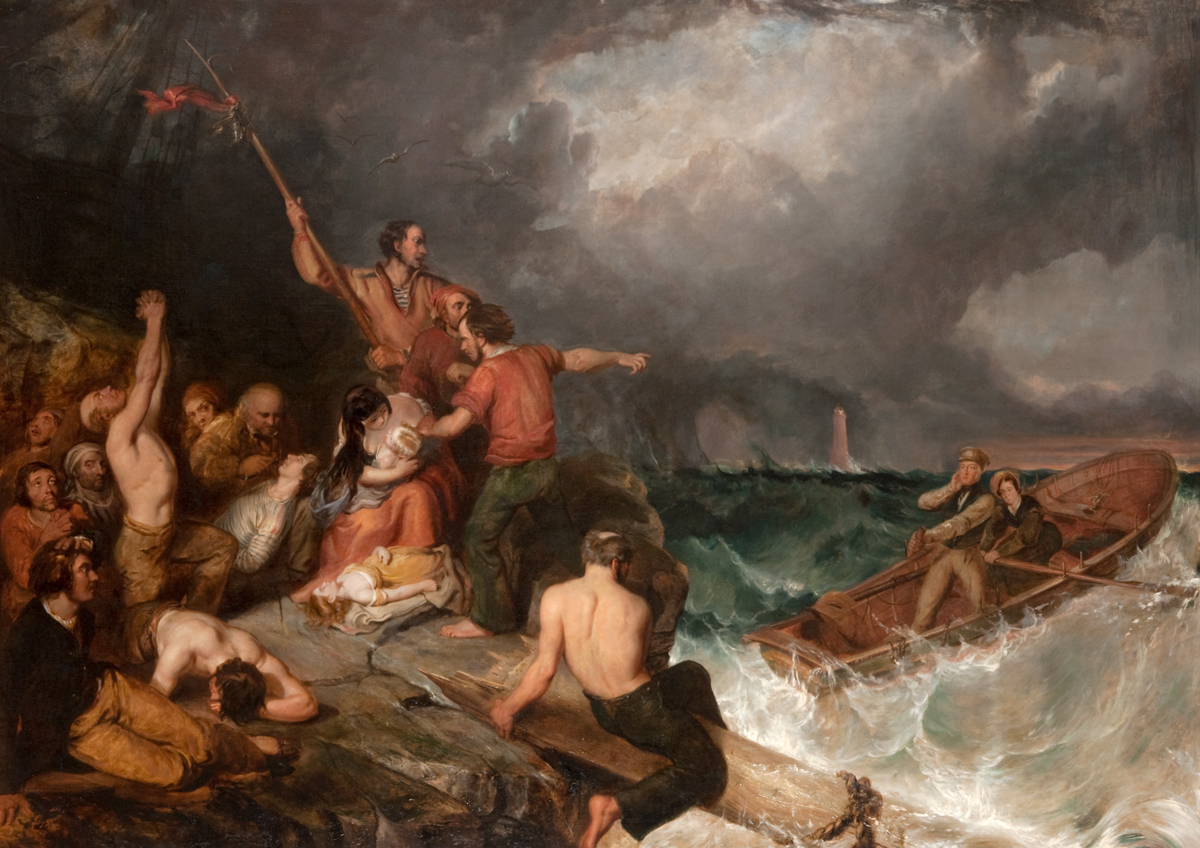
This fridge magnet has been designed to depict the daring rescue from the Forfarshire by Grace and William Darling in 1838, and is part of the full commemorative set of fridge magnets from Lifeboat Collectables which includes famous rescues, key events, and people within the RNLI and its 200 years of service.
1838 The Forfarshire rescue
On 5th September 1838 the Forfarshire set out from Hull, sailing north heading for Dundee, with 61 passengers and crew and a cargo of cotton. Passing Flamborough Head a failure of pumps supplying water to the boilers reduced her steaming capacity. Her situation deteriorated through the next day as leaks from the boilers flooded the bilges, and at 10pm that night, off St Abb’s Head, her engines failed. Despite near gale force North-easterly winds, her captain put her under sail and continued on his way; but the weather worsened to a full gale, with heavy rain and a change in wind direction to due North. The ship was turned around to run before the wind and seek shelter behind the Farne Islands.
At 3am on 7th September, she struck aground with considerable force, on Big Harcar (locally known and pronounced as “Great Hawker”), one of the Outer Farne Islands. A group of eight sailors and a passenger managed to lower and escape in a lifeboat, to be picked up the following morning by a passing schooner bound for Hull. The remaining passengers and crew were left to the mercy of the sea, which swung the Forfarshire around and tore off the stern quarterdeck and cabins, leaving only the bow and fore sections of the ship anchored to the rock.
A few passengers managed to hold on to railings and make it through the night, later transferring to Big Harcar, including Sarah Dawson (a passenger), who was distraught, holding the bodies of her two dead children (James, 7, and Matilda, 5). Their predicament was spotted at first light by Grace Darling, daughter of William, the keeper of the Longstone Lighthouse, which was situated about 600 yards from the wreck site.
Grace counted 13 people on Big Harcar and pleaded with her father to go to the rescue, but he initially refused on the grounds that the sea was too rough and the two of them could not possibly manage their only boat in such conditions. However, Grace prevailed and they set off in their Northumberland Coble, a 21 ft foot clinker built open rowing boat designed for a minimum crew of 3 strong men.
They rowed for some 1,700 yards, mostly in the lee of Great Harcar. On arrival at the wreck site they found only nine remaining survivors. William left Grace to hold the boat steady whilst he assisted the transfer of three of Forefarshire’s crew and Mrs Dawson to the boat. William with the aid of two of the rescued crew then rowed the boat back to the lighthouse while Grace comforted Mrs. Dawson who had by this time lost the bodies of her two sons to the sea.
William and the two strongest of the rescued crew then rowed back to the wreck site and rescued the remaining four survivors. The survivors confirmed that thirteen had made it to the rock during the night but four had been swept away shortly before the arrival of Grace and William. Forty-three passengers and crew, including the captain and his wife, perished.
Both William and Grace received the RNLI’s Silver Medal in 1838 – the first recipients of this new award.
[ References: Wikipedia Image Source: Wikimedia Commons ]



ChrisN –
the magnet is very high quality
Jack F –
Wonderful little piece!